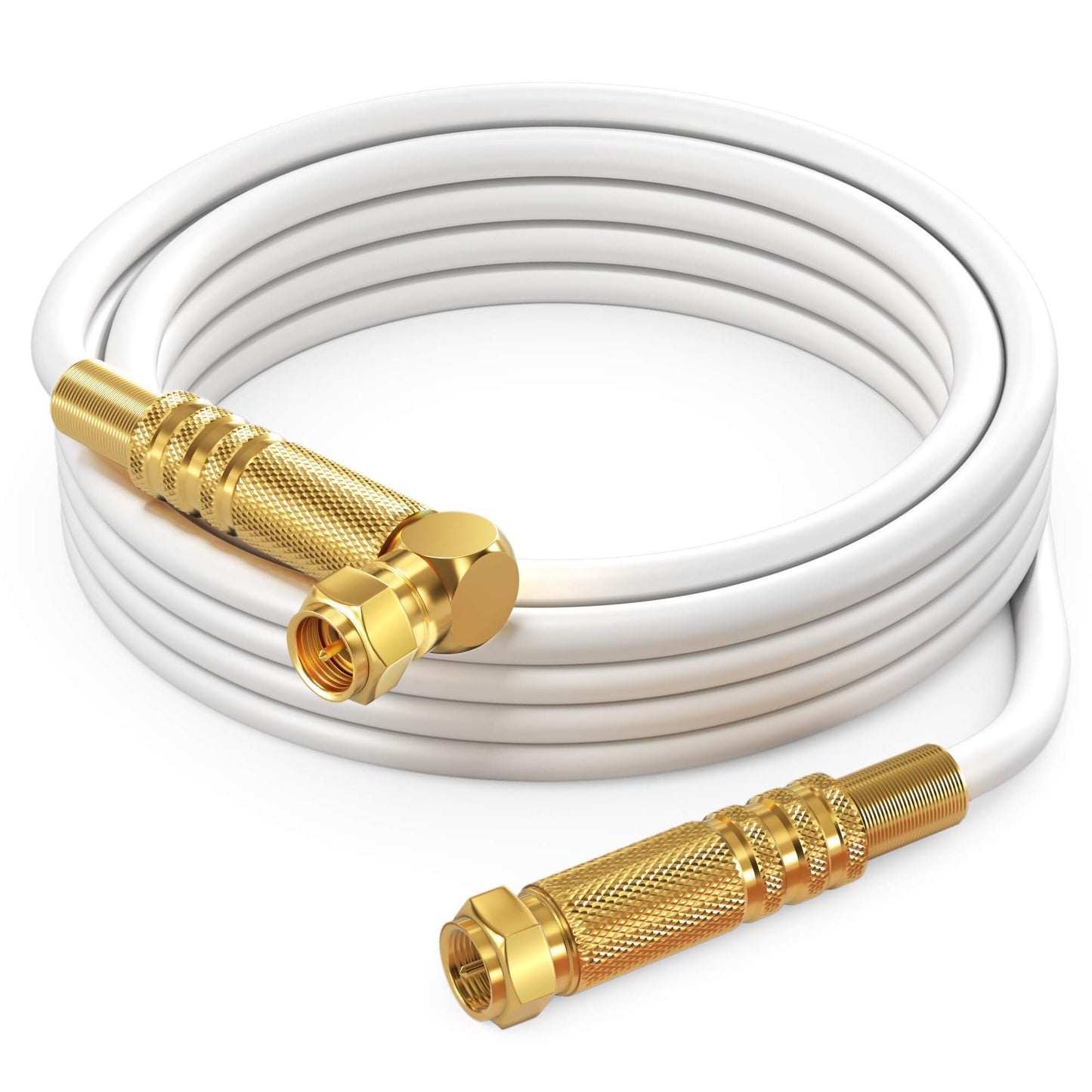
RG6 Quad Shield Coaxial Cable 90° Angled
Free shipping on orders over $25.00 - You're $25.00 away!
$0.00 USD
Free Shipping on Orders $25+
SKU:RG6-STA-GLD-4S-2FT
In stock and Ready to Ship
Unlock Exclusive B2B Pricing. Sign Up Today


Quad shield RG6 uses additional shielding layers to help reduce signal noise from nearby electrical sources. It’s often chosen for cable TV and internet coax runs when you want added protection against interference, especially in apartments, dense wiring areas, or entertainment centers with many devices.
A right-angle coax connector helps in tight spaces where a straight connector sticks out too far. It can also reduce stress on the coax port and help avoid forcing the cable into a tight bend behind a wall-mounted TV or inside a cabinet.
If your TV or cable box uses the standard coax “screw-on” port (F-type), this cable is the correct connector style. Most cable TV equipment and wall coax plates use that same connection.
Many cable modems use an F-type coax connection, so RG6 is commonly used for that setup. The simplest check is the modem’s coax port. If it is a standard threaded coax input, it’s the right connection type.
Most buyers use the angled end where clearance is tight, such as behind a wall-mounted TV, a media console, or a recessed wall plate. If the wall plate is tight but the device has room, place the angled end at the wall. If the device is tight to the wall, place the angled end at the device.
Quad shielding helps by reducing interference and keeping the coax signal cleaner. Actual picture quality and internet performance still depend on the service coming in, equipment condition, splitters, and how the wiring is routed, but improved shielding can help reduce avoidable signal noise.
The coax connector itself is the widest point. Many setups route coax through wall plates using a coax keystone or pass-through designed for F-type connectors. If you’re threading through a small opening, measure the pass-through size or use a wall plate designed for coax.
Yes, splitters typically use F-type coax ports. Keep connections snug and use only the number of splits you need, since each split can affect overall signal strength.
Tighten it until it feels snug and secure without forcing it. Over-tightening can stress the port on the TV, modem, or wall plate. A secure fit matters more than extreme tightness.
Choose a length that reaches comfortably with a little slack for routing, but avoid excessive extra cable that has to be coiled tightly behind equipment. For wall-mounted TVs and entertainment centers, a clean route with gentle bends usually performs better and looks better.